TECH CONTRIBUTION SERIES ② — SMART FACTORY → DARK FACTORY
Not a factory without people, but one that maintains optimal conditions without repetitive human intervention
3-Second Summary
- Autonomy matters more than unmanned operation / A Dark Factory is an operating system that connects sensing, prediction, decision, execution, and learning.
- Automation and autonomy are different / Fixed-rule automation expands into autonomy that adjusts objectives and actions as conditions change.
- The human role does not disappear / Operators move away from repetitive decisions and focus on objectives, safety, exceptions, and continuous improvement.
Why the Name “Dark Factory” Can Be Misleading
The terms Dark Factory and Lights-out Factory originated from production facilities automated to the point that continuous lighting and a permanent on-site workforce were no longer necessary. Taken literally, the term can suggest that removing people and lights is the objective. In reality, manufacturing competitiveness depends not on a dark shop floor, but on whether the production system can understand its own condition and respond to variation.
Lines with a limited product mix and low process variability can achieve a high degree of unmanned operation. By contrast, factories with high-mix, low-volume production, raw-material variation, frequent equipment changeovers, and changing quality requirements cannot define every situation in advance with fixed rules. A practical Dark Factory therefore does not remove people completely. It autonomously manages normal conditions and escalates only exceptional situations to human operators.
How Are Automation and Autonomy Different?
| Category | Automated Factory | Autonomously Operated Factory |
|---|---|---|
| Operating basis | Repeats predefined sequences and thresholds | Analyzes current conditions and future outcomes to adjust parameters and actions |
| Response to variation | Operates reliably only within anticipated ranges | Uses data to reflect deviations and early anomaly signals |
| Decision maker | Rule designer or shop-floor operator | AI analysis + policy and safety rules + human approval when required |
| Learning structure | Maintains the same logic until the program is modified | Uses operating results and feedback to improve models and rules |
| Operating objective | Improve the speed and consistency of repetitive work | Optimize quality, productivity, energy, and equipment stability together |
Automation excels at repeating predefined work quickly and accurately. Autonomy also includes deciding what to do when process conditions change. A factory does not become a Dark Factory simply because it has many robots or PLCs. If decision criteria remain fixed and people must intervene for every exception, the level of automation may be high, but autonomy remains limited.
More Robots Do Not Automatically Create Autonomous Operations
According to the International Federation of Robotics, 542,000 industrial robots were newly installed worldwide in 2024, more than twice the 221,000 installed ten years earlier. The global operational stock also reached 4.664 million units.1 This expansion shows how rapidly the physical foundation of factory automation is growing.
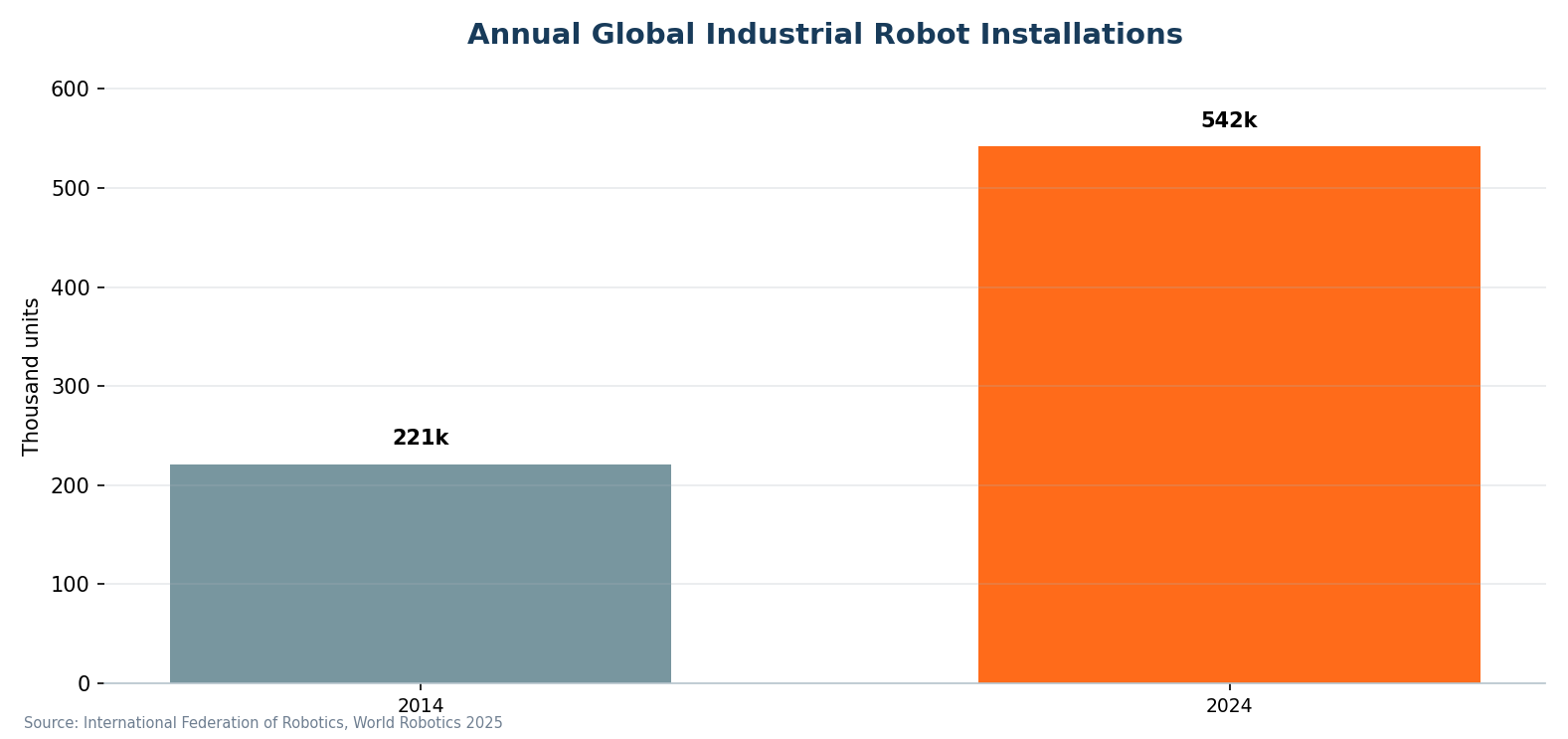
Figure 1. Global annual industrial-robot installations more than doubled over ten years Source: IFR, World Robotics 2025
Robots, however, are devices that execute commands. Deciding which product to inspect, when to change process conditions, and how equipment anomalies affect quality requires the integration and analysis of image, sensor, and process data. If physical automation is the arms and legs of a Dark Factory, data and AI are its senses and brain.
A Dark Factory Is a Six-Stage System Connected in a Closed Loop
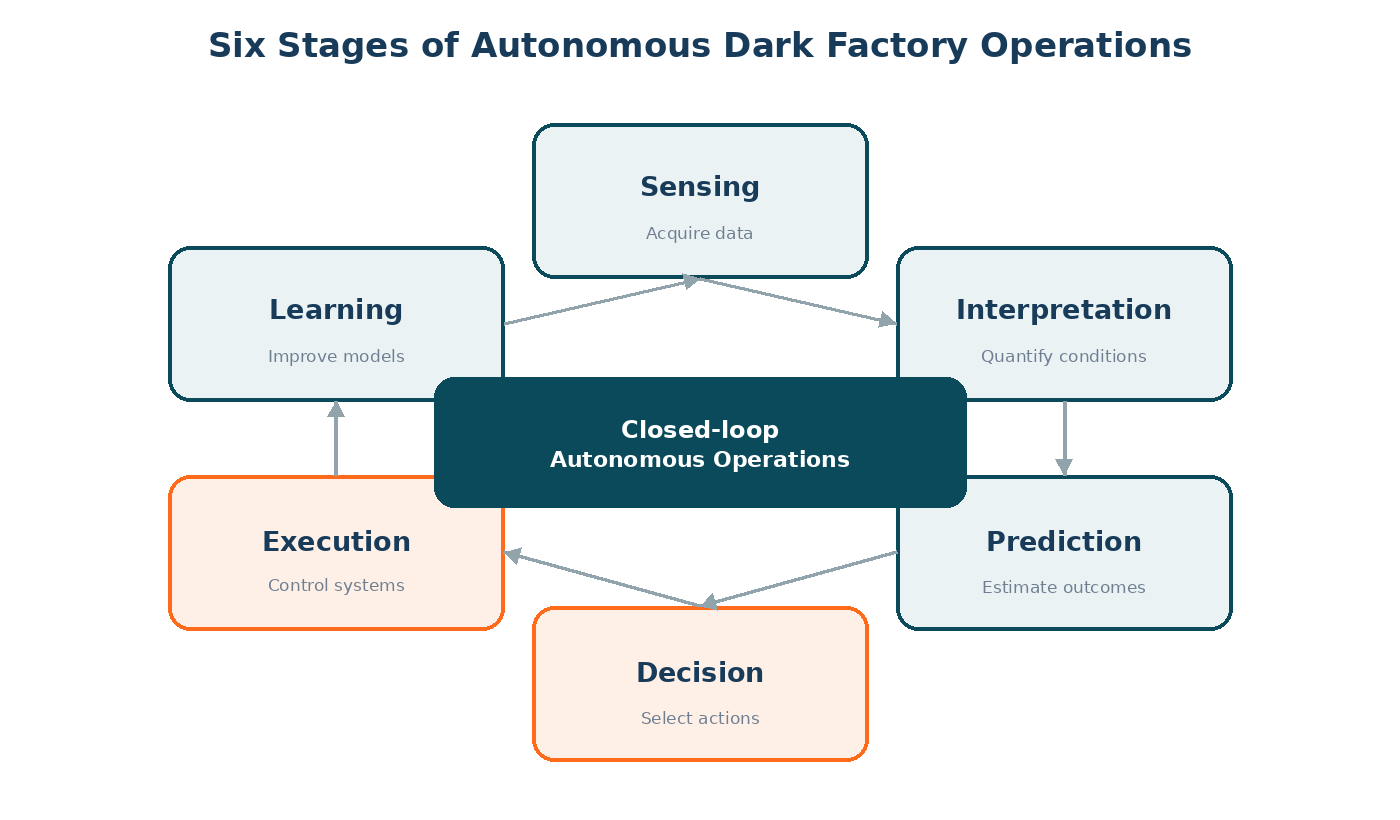
Figure 2. Closed-loop autonomous operations from sensing to learning Source: Reconstructed by ITIV AI
- Sensing / Acquire product and process conditions in real time from cameras, thermal imaging, sensors, PLCs, and MES.
- Interpretation / Convert raw data into quantitative values such as defect location, height, temperature, speed, pressure, and anomaly scores.
- Prediction / Estimate the quality, equipment condition, and energy use that will occur if current conditions continue.
- Decision / Determine adjustable process variables and priority actions within target-quality and safety boundaries.
- Execution / Connect decisions to shop-floor action through operator guidance, approval requests, and PLC, robot, or MES commands.
- Learning / Store post-execution results and continuously improve models, work standards, and control policies. If even one of these stages is disconnected, autonomous operation is constrained. Accurate sensors without a predictive model support only reactive response; predictions that are not connected to equipment still require operators to repeat every decision and adjustment. A Dark Factory is not a single machine. It is a design problem that spans the entire data flow.
If even one of these stages is disconnected, autonomous operation is constrained. Accurate sensors without a predictive model support only reactive response; predictions that are not connected to equipment still require operators to repeat every decision and adjustment. A Dark Factory is not a single machine. It is a design problem that spans the entire data flow.
Real Lights-Off Cases Demonstrate Integrated Operations
The Valeo Shenzhen plant introduced by the World Economic Forum deployed 42 Fourth Industrial Revolution use cases, including AI-based solutions, 14 advanced algorithms, and a fully automated lights-off workshop. Productivity increased by 60.2%, while finished-goods defects fell by 45.9%, lead time by 34.5%, and energy use per unit by 27.1%.2
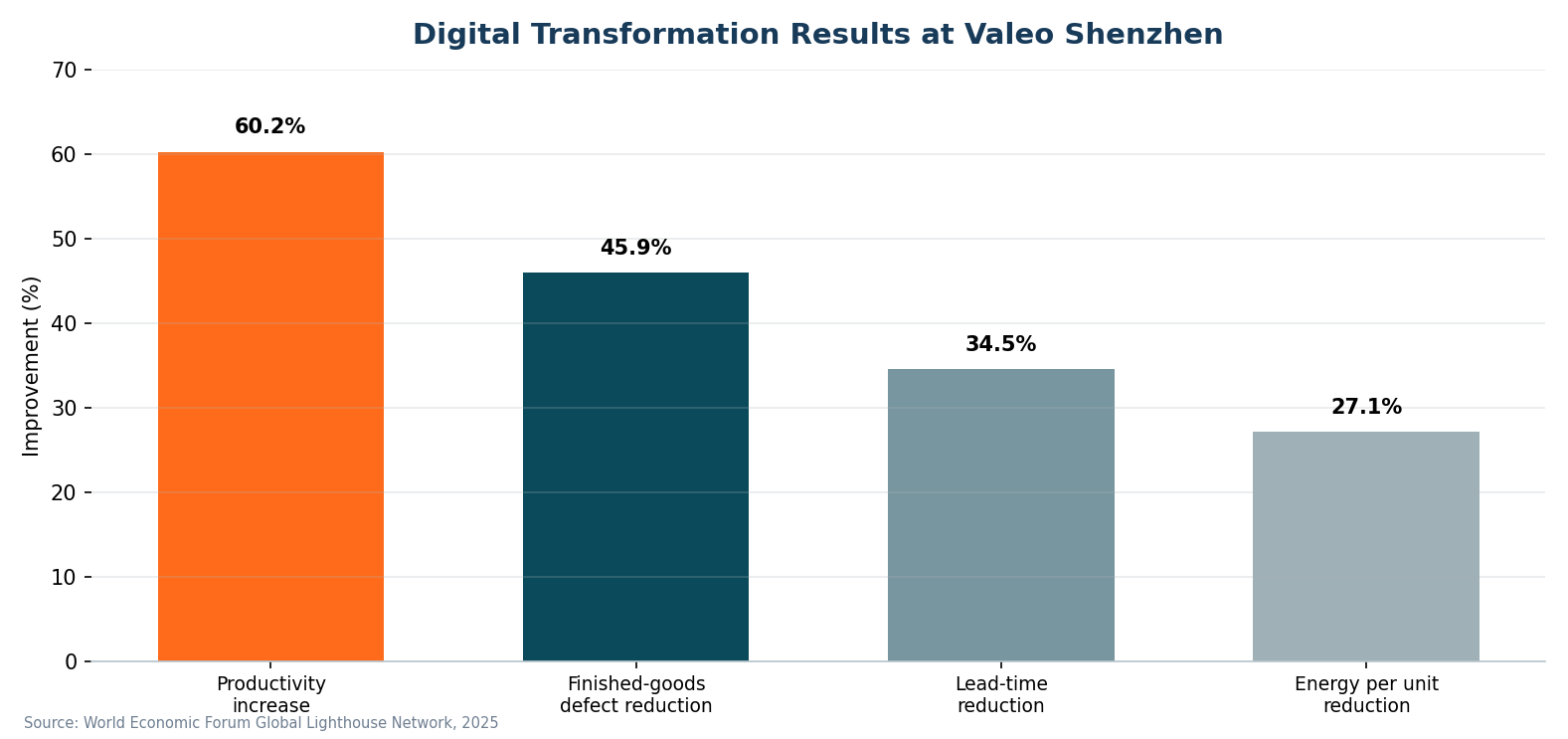
Figure 3. Results from combining AI, advanced algorithms, and a lights-off workshop Source: World Economic Forum, 2025
The important point is not simply that the plant reduced the number of operators. It redesigned multiple technologies and operating processes together to improve quality, output, energy performance, and delivery. Dark Factory performance should therefore be measured through operational KPIs such as defect rate, lead time, OEE, energy use, and intervention frequency—not only by hours of unmanned operation.
Levels of Autonomy Can Be Distinguished by Control Authority
| Level | Role of AI | Shop-floor execution | Suitable deployment stage |
|---|---|---|---|
| L0 Observe | Display conditions and KPIs | People analyze, decide, and operate | Initial data-collection stage |
| L1 Diagnose | Present anomalies and possible causes | People select the action | Advanced monitoring |
| L2 Recommend | Recommend predicted values and optimal conditions | Change parameters after operator approval | AI Guidance deployment |
| L3 Limited Autonomy | Automatically adjust conditions within approved ranges | Request approval only for exceptions or hazardous conditions | Processes with clear repeatability and safety envelopes |
| L4 Autonomous Operations | Optimize objectives across multiple connected processes | People manage objectives, policies, and audits | Validated closed-loop processes |
Most manufacturing sites do not move from L0 to L4 in a single step. They should validate predictive accuracy and data quality, confirm the stability of recommendations during an operator-approval phase, and then expand control range and interlocks gradually. Processes involving product safety or equipment damage require not only model accuracy, but also a design that returns the process to a safe state when a failure occurs.
Where Are People in a Dark Factory?
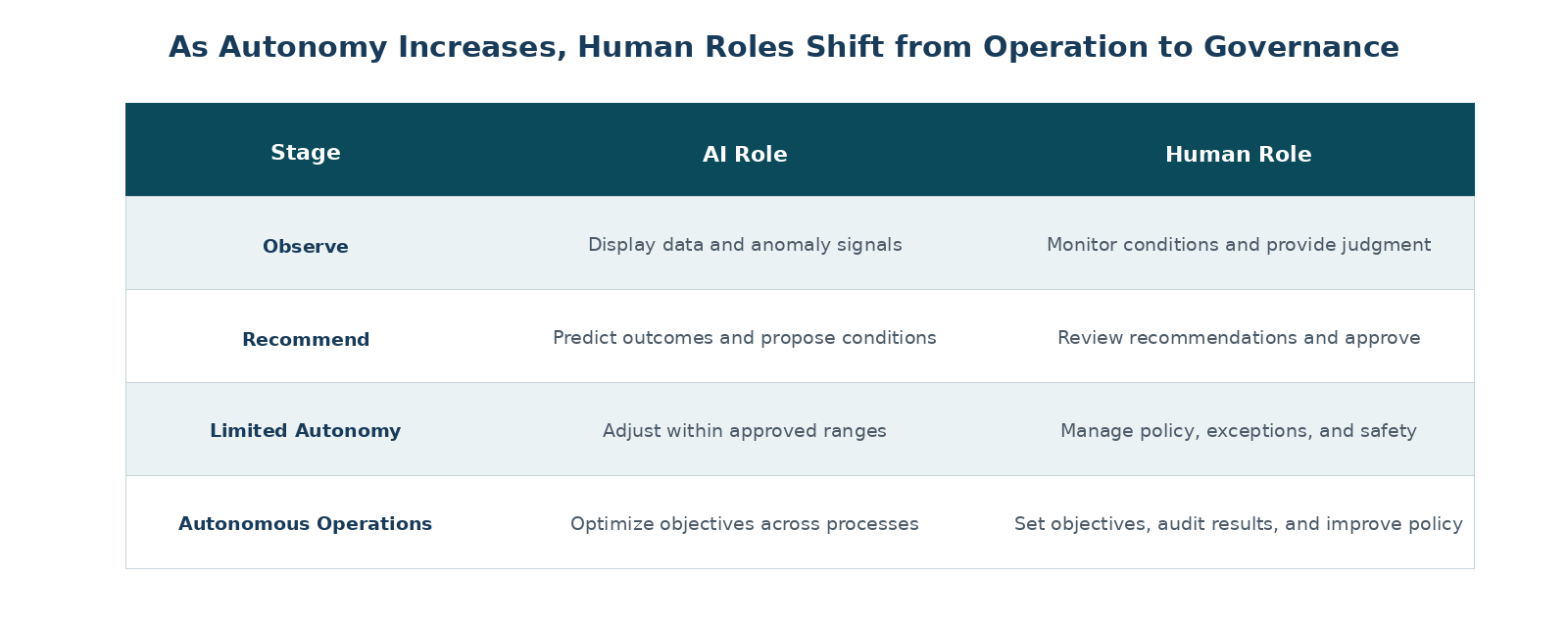
Figure 4. How AI and human roles change as autonomy increases Source: Reconstructed from ITIV AI’s technical perspective
Human roles do not disappear; they move to a different position. Operators step away from repeatedly checking screens and entering values. Instead, they define production targets, allowable ranges, and safety policies, and resolve exceptions that AI cannot handle. Equipment engineers shift from post-failure repair toward managing early-warning signals and model deviation, while quality teams manage data-driven quality standards and traceability rather than relying primarily on sample inspection.
NIST describes Smart Manufacturing as an adaptive system with different levels of autonomy and notes that AI and machine learning can improve efficiency, adaptability, and autonomy across the manufacturing value chain. At the same time, it identifies industrial-data complexity, integration with heterogeneous sensor and control systems, and the need for reliability, explainability, and safety as major remaining challenges.3
Three Criteria for Evaluating a Dark Factory
- Exception-handling rate rather than hours of unmanned operation / The key question is not how long people were absent, but how many situations the system handled reliably.
- Operational latency rather than AI accuracy alone / A prediction has no value if it arrives after the point at which the process could still be changed.
- A safe governance structure rather than the breadth of automatic control / It must be clear who can approve, block, or recover commands, and under what conditions.
Which Process Should Be Automated First?
Dark Factory transformation should begin not with the most complex process, but with one in which data and control conditions can be clearly defined. The first target should allow rapid performance measurement, return to a safe state if something fails, and contain a high share of repetitive operator judgment.
| Selection criterion | Conditions favorable for early deployment | Risks to verify |
|---|---|---|
| Repeatability | Product and process sequences are relatively stable and standard work exists | Do frequent changeovers and exception tasks undermine the rules? |
| Measurability | Defects, quality, and equipment conditions can be judged numerically or visually | Do answer criteria vary by operator and destabilize the training data? |
| Intervention frequency | Operators repeatedly inspect, correct, or approve the process | Are reasons for intervention unrecorded, making root-cause analysis difficult? |
| Controllability | Adjustable variables are defined in PLCs, robots, or MES | Are safety interlocks and manual-recovery procedures in place? |
| Performance tracking | Defect rate, Cycle Time, energy use, and downtime can be compared before and after deployment | Is there no baseline, making PoC effects difficult to quantify? |
A practical approach is to validate observation, recommendation, approved execution, and limited autonomy in one process that meets these criteria, and then expand to adjacent processes and equipment. Targeting the entire factory from the beginning can make data definitions, interfaces, and safety validation complex at the same time, ultimately slowing the transformation.
Key Conclusion
A Dark Factory is not simply a factory with the lights off. It is a system that sees, predicts, decides, and acts safely on its own. People move away from repetitive judgment and manage objectives, policies, exceptions, and improvement.
In Closing

References and Sources
※ External figures and cases in this article were compiled from official publications by institutions and companies and from the supplied product brochures. ITIV AI visually reconstructed the charts and diagrams from the original figures or technical structures.
Bibliography
- NIST, “Smart Manufacturing Systems Design and Analysis Program”. Reference: the view of Smart Manufacturing as an adaptive system with multiple levels of autonomy. Link
※ The L0–L4 autonomy levels and role classifications are illustrative models reconstructed by ITIV AI for technical explanation and are not official certification criteria.
Footnotes
-
International Federation of Robotics, “World Robotics 2025”. Reference: 542,000 new industrial-robot installations in 2024, 221,000 in 2014, and an operational stock of 4.664 million units. Link ↩
-
World Economic Forum, “Valeo Interior Controls - Shenzhen”. Reference: productivity, defect, lead-time, and energy results after deploying 42 Fourth Industrial Revolution use cases and a lights-off workshop. Link ↩
-
NIST, “2026 Roadmap on Artificial Intelligence and Machine Learning for Smart Manufacturing”. Reference: efficiency, adaptability, and autonomy in AI- and ML-based manufacturing, together with challenges involving data, integration, and reliability. Link ↩